.png)
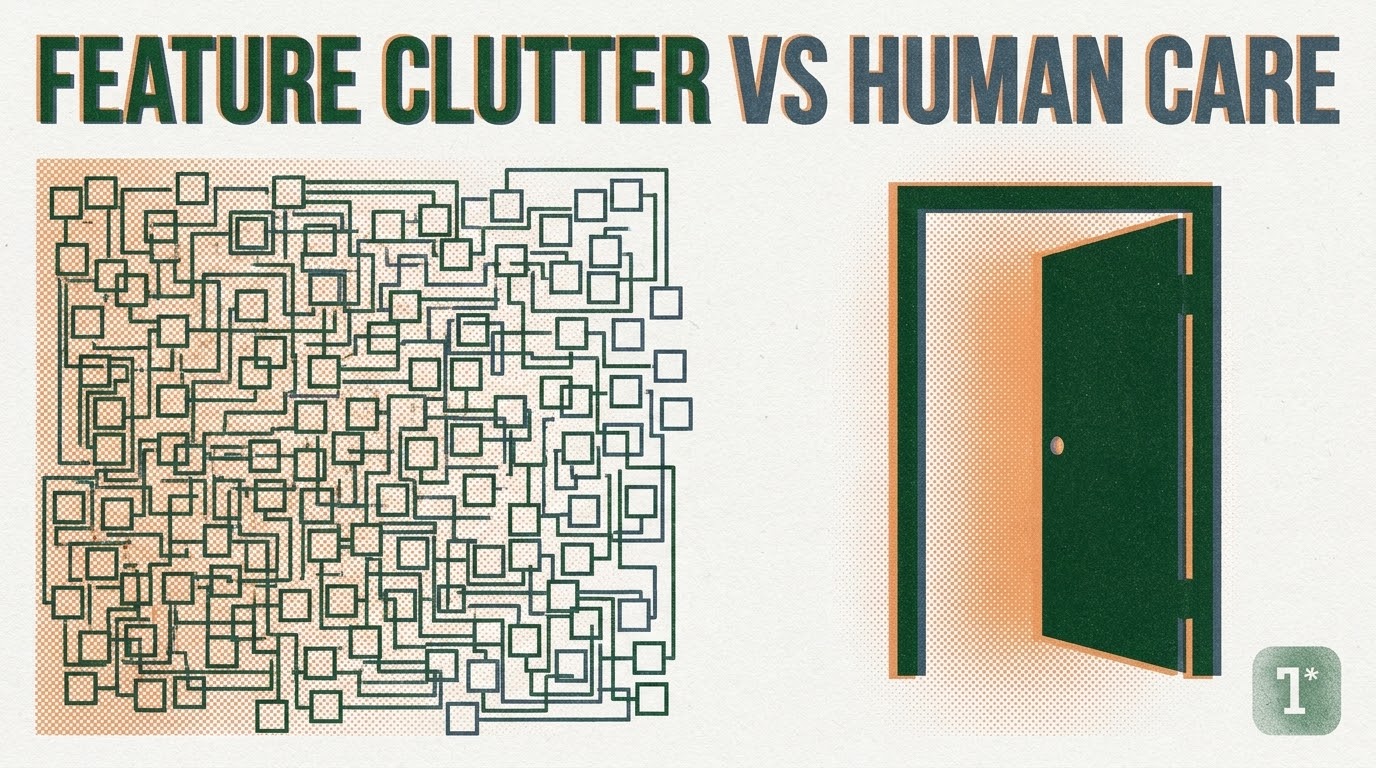
Sonia, an Operations Manager at a community housing network, sat in a vendor demo meeting surrounded by executive leadership. On screen, a sales representative for an enterprise case management provider walked through a slide deck featuring 150 software features, endless custom dashboards, and dozens of mandatory field options.
Sonia looked past the glossy icons and imagined her team on a busy Tuesday morning. She pictured Sam, a housing caseworker, trying to log an emergency bed placement while navigating six dropdown menus and three popup windows just to create a basic client record.
Sonia raised her hand and asked a simple question: "How many clicks does it take Sam to enter a daily narrative note and log a shelter stay?"
The sales representative paused, shifted his screen, and began clicking through sub-menus. Five clicks. Eight clicks. Twelve clicks.
Sonia calculated the math in her head. For a team of twenty caseworkers handling fifteen participants a day, those extra clicks represented hundreds of hours stolen from direct human care every single year.
When non-profits search for an ETO software alternative, an Apricot software alternative, a Bonterra alternative for nonprofits, or a ServicePoint alternative, they are often lured into evaluating vendors based on feature volume. Enterprise vendors win contracts by promising endless checkboxes.
However, research on technology adoption in human services reveals a stark reality: up to 70% of enterprise software implementations fail to reach full adoption, primarily because systems are designed for corporate buyer evaluations rather than frontline usability.
When software is built with corporate logic, it turns social workers into data clerks. Caseworkers are forced to choose between feeding a demanding software interface or making meaningful eye contact with a person in crisis. When the tech gets in the way, staff burnout skyrockets, and client trust dissolves.
Transform was created to break the compromise between administrative reporting and relational care. Here is how our platform differs from generic corporate CRMs:
Choosing case management software for nonprofits is not just an IT decision. It is an operational commitment to your team's mental well-being and your clients' dignity.
If your agency is ready to replace spreadsheets in case management for a nonprofit with a system built by people who have actually done the work, we invite you to start a conversation.
Would you like to see a case management software demo nonprofit teams actually enjoy using? Reach out to our team today.
Schedule your free demo today and experience the Transform difference.