.png)
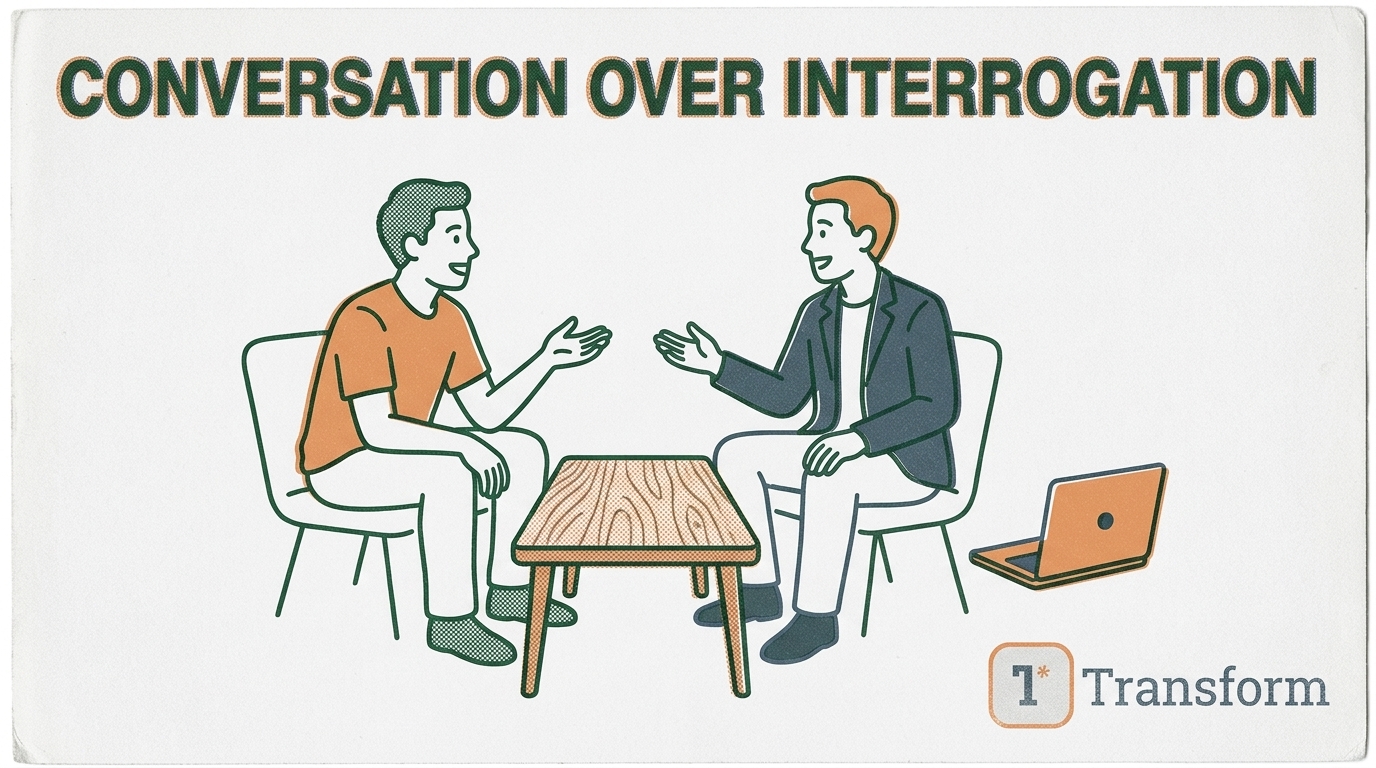
Maya, a community intake specialist at a local family resource center, sat behind her desk with her hands hovering over a keyboard. Across from her sat Liam, a young father seeking emergency rental support. Maya had a four-page administrative intake form open on her screen. As she read through mandatory demographic drop-downs and financial verification fields, she noticed Liam slowly pull back. He crossed his arms, began giving one-word answers, and kept his eyes fixed on his boots.
Maya felt the air in the room change. She was not having a meaningful dialogue with a neighbor in need. She was conducting an interrogation.
This uncomfortable reality plays out thousands of times every day across the social services sector. Traditional software systems force caseworkers to prioritize data entry over human connection during the most crucial phase of support: the first impression.
Research on client-centered service delivery indicates that caseworkers spend up to 50% of an intake session looking at computer screens and filling out software forms rather than maintaining eye contact and active listening. When technology demands more attention than the human sitting across the table, rapport dissolves quickly.
Most case management software for nonprofits was built by commercial technology vendors following a corporate sales mindset. They compete on feature parity: adding endless checkboxes, drop-down options, and complex form fields to win executive vendor evaluations.
However, adding more mandatory fields creates severe social service data collection problems. It forces agencies into a rigid intake structure that increases the client retraumatization intake process risk. When a participant is asked to recount painful life details to satisfy a software interface, trust breaks down before support even begins.
Social workers do not need more drop-down menus. They need technology that gets out of the way so real conversations can happen.
When we built Transform, we refused to play the corporate feature checklist game. Instead of building tools that turn social workers into data entry clerks, we focused on human-centered design.
Our Spark intake methodology reimagines how information is gathered:
When agencies choose the best case management software for social workers, the primary goal should always be strengthening the therapeutic alliance. Software should support the practitioner, empower the client, and simplify administrative record-keeping.
By shifting from interrogation-based forms to conversation-led intake, organizations can replace spreadsheets in case management for a nonprofit while creating a welcoming environment where clients feel heard rather than audited.
Would you like to see how Spark turns intake forms into meaningful human conversations? Connect with our team to schedule a brief walkthrough.
Schedule your free demo today and experience the Transform difference.