.png)
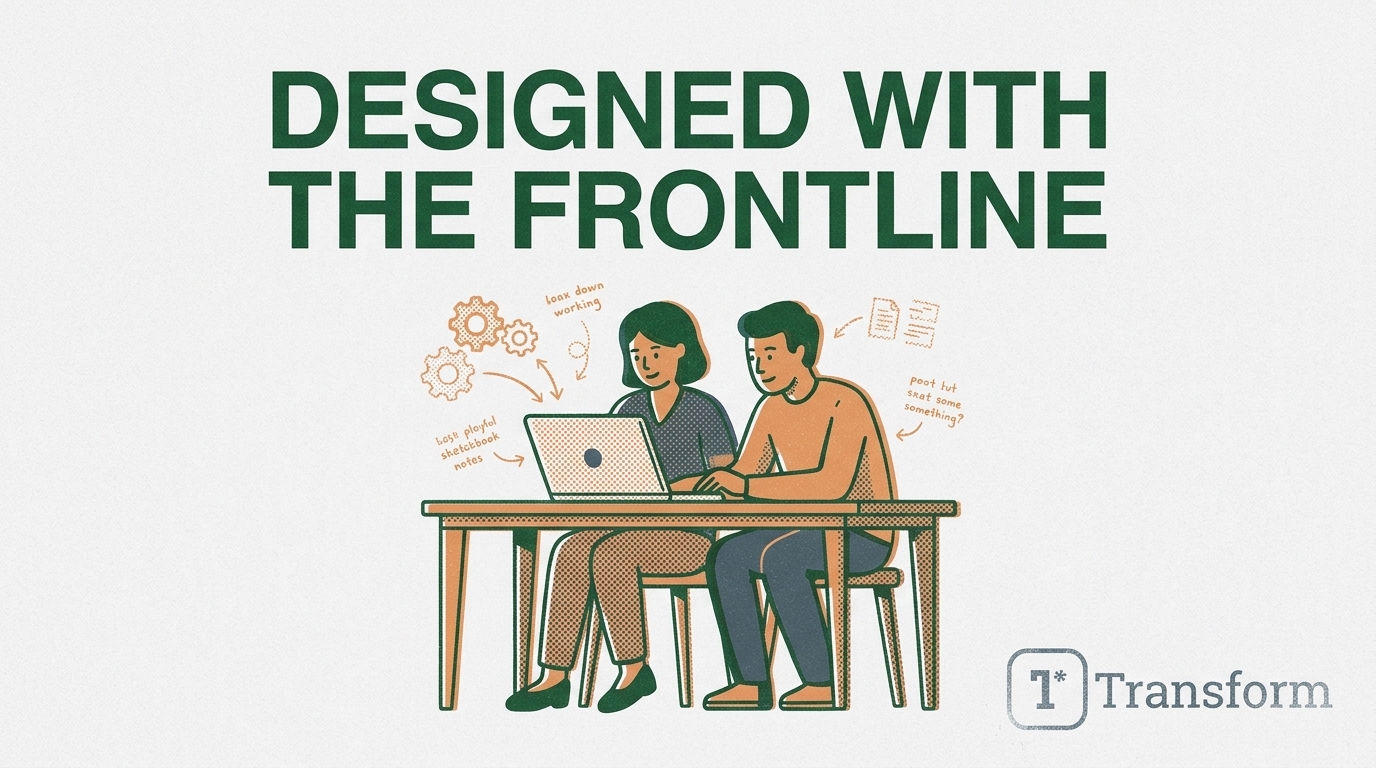
David, a senior software designer, sat beside Amira, a housing navigator at an Edmonton community drop-in center. David was excited to show her a new feature he had spent three weeks building: an automated "client risk indicator" that flagged participant records in bright yellow and red badges based on recent intake entries. He thought it was a masterpiece of efficiency.
Amira looked at the screen, took a deep breath, and turned to David. "If a participant walks up to my desk and catches a glance of a bright red 'High Risk' tag next to their name," she said quietly, "I have just destroyed three months of built-up trust in three seconds. Human lives are not danger levels on an administrative dashboard."
David's jaw dropped. In a single sentence, Amira blew up three weeks of engineering logic.
That moment was a harsh lesson in humility. It also captured everything wrong with how technology is traditionally brought into the social service sector.
When commercial software companies build tools for non-profits, they work from sterile product specifications, boardroom requirements, and corporate sales goals. They design for executive buyer demos, not for the caseworker sitting across from a person in crisis.
The result is widespread implementation failure. Research across workplace technology adoption shows that up to 70% of new software initiatives fail to reach full adoption, primarily because systems are designed and selected without direct frontline user co-design.
When software is built without frontline input, caseworkers simply stop using it. They revert to risky workarounds or stick to manual tracking, which only worsens existing social service data collection problems.
When we set out to build Transform inside our own frontline charity, we made a binding promise: caseworkers would be our primary software architects.
Every time a product feature looked brilliant on paper, we brought it directly to the intake room. Time and time again, practitioners taught us lessons that no product spec could ever capture:
When agencies look for an ETO software alternative, an Apricot software alternative, or a Bonterra alternative for nonprofits, they are rarely looking for more complex features. They are looking for software that respects their daily reality.
We built Transform to help agencies replace spreadsheets in case management for a nonprofit with confidence. Every workflow in our platform is backed by full PIPA PIPEDA compliant case management, strict Canadian data residency, and the lived experience of frontline practitioners who tested it first.
True innovation in social services does not come from Silicon Valley codebases. It comes from listening to the people doing the work on the ground every day.
Would you like to see how frontline co-design changes the software experience? Reach out to schedule a case management software demo nonprofit teams actually enjoy using.
Schedule your free demo today and experience the Transform difference.