.png)
Marcus, a Senior Program Officer at a regional community foundation, sits at his desk reviewing a grant renewal for a shelter network. On the left side of his monitor is the grantee's mission statement: "Rooted in human dignity, equity, and trauma-informed care." On the right side is an operational audit revealing that sensitive health, housing, and intake records are being stored across password-free spreadsheets and unencrypted cloud folders.
Marcus knows the Executive Director deeply cares about their community. Yet, there is a stark disconnect between the values stated on paper and the daily reality of their software infrastructure.
This tension is becoming a critical blind spot for philanthropic organizations. Grantmakers spend millions funding frontline programs, but rarely audit the digital tools used to manage those services. When non-profits are left to navigate complex technology on shoe-string budgets, client safety and data privacy are quietly pushed to the back burner.
Sector data from Imagine Canada reveals that 36% of Canadian non-profits have no dedicated staff assigned to cybersecurity or data management. Instead, overworked managers are forced to patch together improvised systems. When agencies lack modern infrastructure, they inevitably resort to using unencrypted files or rigid legacy tools that create severe operational friction.
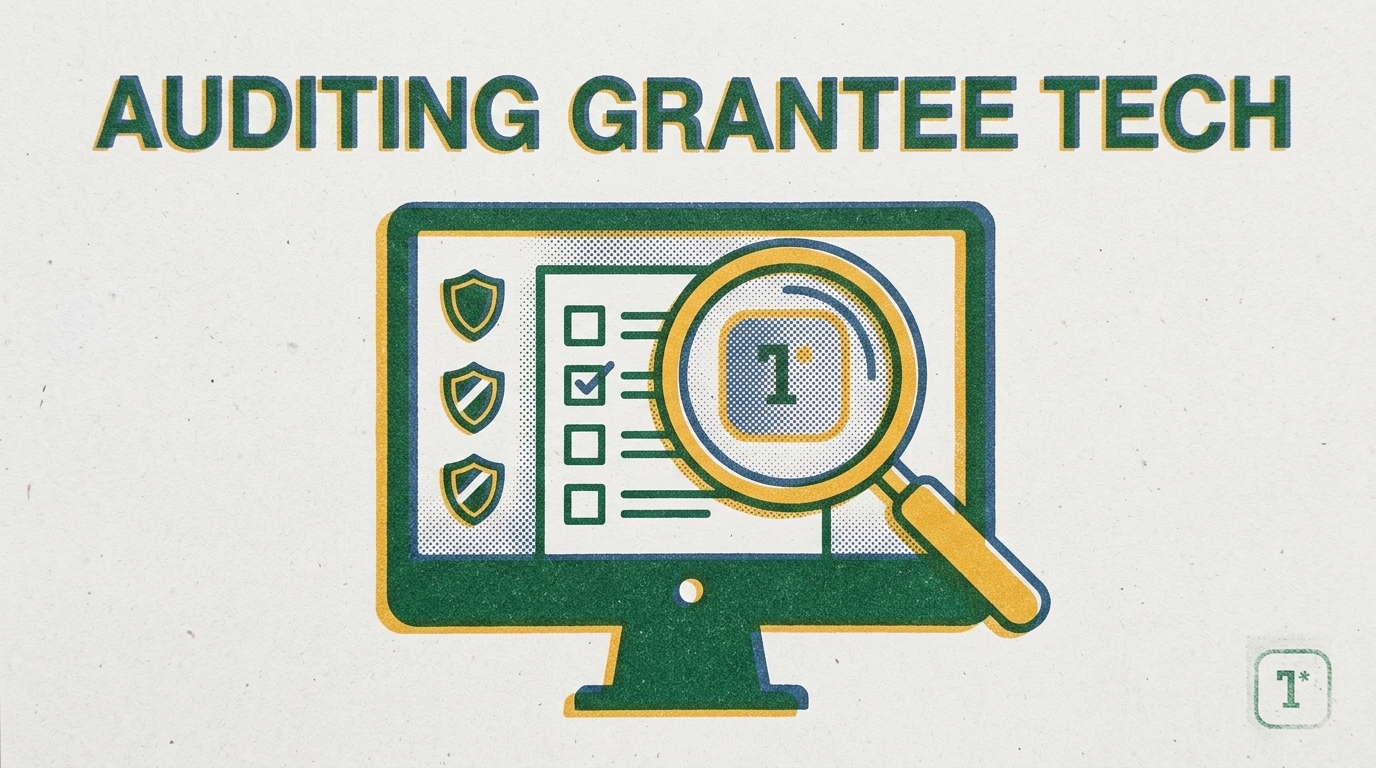
If grantmakers want to ensure their investments build lasting community safety, they must help grantees audit their tech stack. Here is a practical five-point checklist every funder can use to evaluate software sustainability.
Is the agency using PIPA PIPEDA compliant case management tools? Many low-cost platforms route data through foreign servers or fail to meet Canadian provincial privacy standards. True data protection requires privacy by default, ensuring that sensitive participant histories remain strictly confidential.
Where does the data actually live? For Canadian agencies, housing client information on non-Canadian servers introduces legal vulnerabilities. Ensuring full data residency within Canadian borders guarantees that sensitive records remain protected under domestic legal frameworks.
Does the software help frontline staff, or does it add administrative friction? When software requires hours of duplicate entry, it accelerates caseworker fatigue. Evaluating ease of use ensures technology actively works to reduce frontline worker burnout rather than driving staff turnover.
Can the software generate logic models and outcome maps without manual reconstruction? If an agency must replace spreadsheets in case management for a nonprofit, their system should automatically transform daily operational notes into clean funder metrics. If leadership spends weeks manually calculating stats for your annual report, the software is failing them.
Does the intake process minimize client retraumatization intake process risks? Legacy databases often force participants to answer invasive questions repeatedly across multiple programs. Dignity-by-design means client stories are collected once, stored securely, and treated with sacred trust.
When agencies search for an ETO software alternative or an Apricot software alternative, they often face a tough choice between rigid corporate databases and unsafe spreadsheets.
Transform was built from inside the social service sector to break that compromise. Born as a frontline charity before growing into a purpose-built software provider, Transform passes every criteria on this checklist out of the box. We offer nonprofit case management software Canada agencies trust to protect participant stories while automating funder intelligence.
By encouraging your grantees to adopt technology built specifically for social service case management software needs, you protect both your philanthropic investment and the vulnerable populations you serve.
Would you like to review our full Agency Charter or explore how we partner with grantmakers to sponsor tech upgrades for grantee cohorts? Let us schedule a brief conversation.
Schedule your free demo today and experience the Transform difference.