.png)
Sarah is sitting in a quiet office long after her last client has left. It’s 4:15 PM on a Friday. Usually, this is the time for reflection on the breakthroughs of the week—the moment a family finally secured housing or a youth spoke up for the first time in group. But Sarah isn’t reflecting. She is staring at 14 open browser tabs, her eyes straining against the blue light as she tries to reconcile handwritten intake notes into a legacy system that feels like it was designed to fight her.
She is performing what we call "extractive labor." She is taking a deeply personal human story and trying to force it into a data point that satisfies a funder’s spreadsheet.
In our sector, we often talk about the "Passion Tax." It is the unspoken expectation that social workers will sacrifice their mental well-being to compensate for broken systems. But when we looked closer at the data, we found a more specific culprit: The Transition Tax.
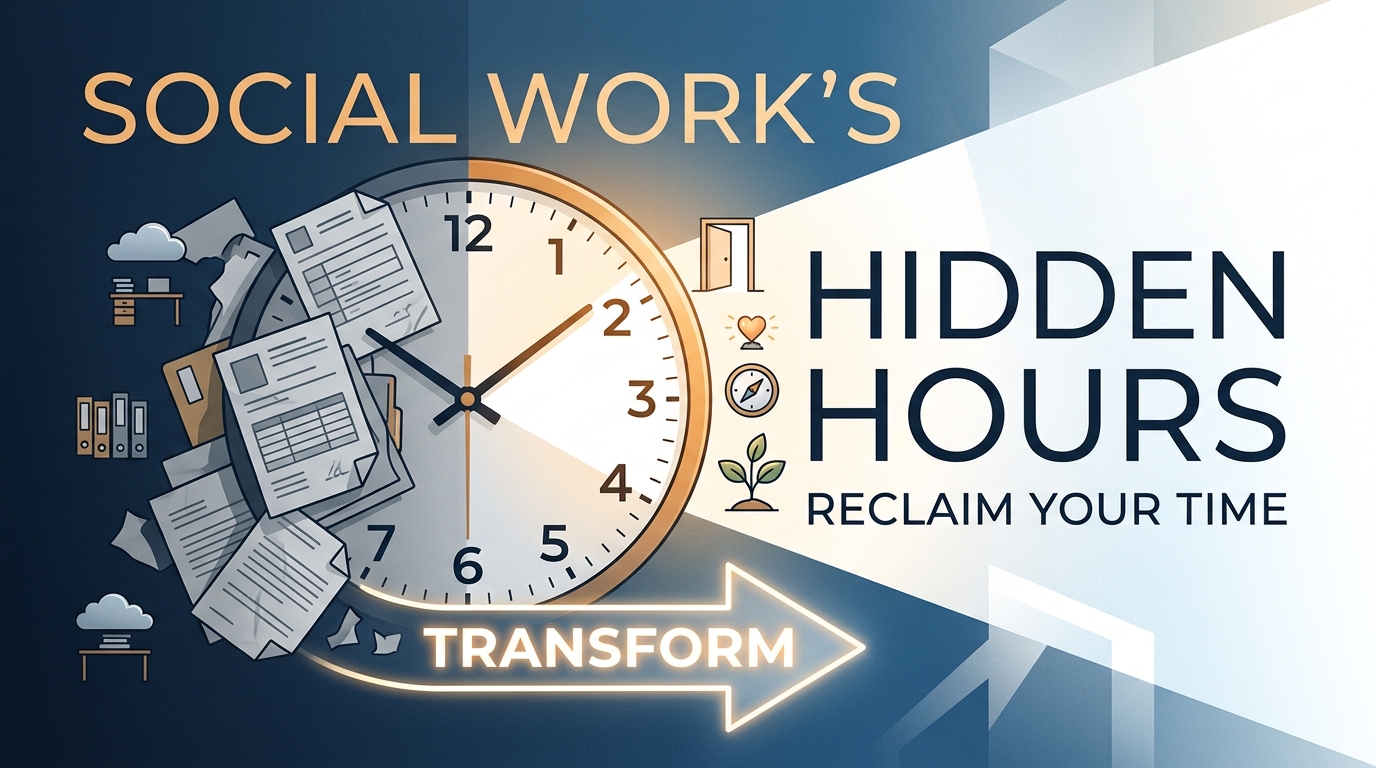
Every time Sarah switches from her compassionate, client-facing mindset to a data-entry mindset, she loses approximately 20 minutes of cognitive focus. Over a 40-hour week, these "hidden hours" add up to a staggering systemic crisis.
Based on our time-diary breakdowns of frontline workers, here is where the week actually goes:
The math is heartbreaking. In a standard 40-hour week, the average caseworker spends only 20 hours on client care. The other 20 hours are buried in legacy software and duplicate forms. That is a 50% loss of mission-critical time.
When systems are extractive, they take from the worker and the client. When systems are supportive, they give that time back. At Transform, we were born as a charity before we became a tech company. We know that the goal of technology isn't to create more data; it's to protect the person holding the story.
Agencies using Transform report that their intake times are cut in half. By automating the reporting friction and centralizing data with dignity, caseworkers are reclaiming up to 20 hours a week.
Sarah shouldn't be hitting a wall at 4 PM on a Friday. She should be heading home knowing that her data is secure, her reports are done, and her time was spent where it belongs: with the people she serves.
Is your team fighting the 50/50 crisis? We’d love to show you how we’re giving those 20 hours back.
Schedule your free demo today and experience the Transform difference.